

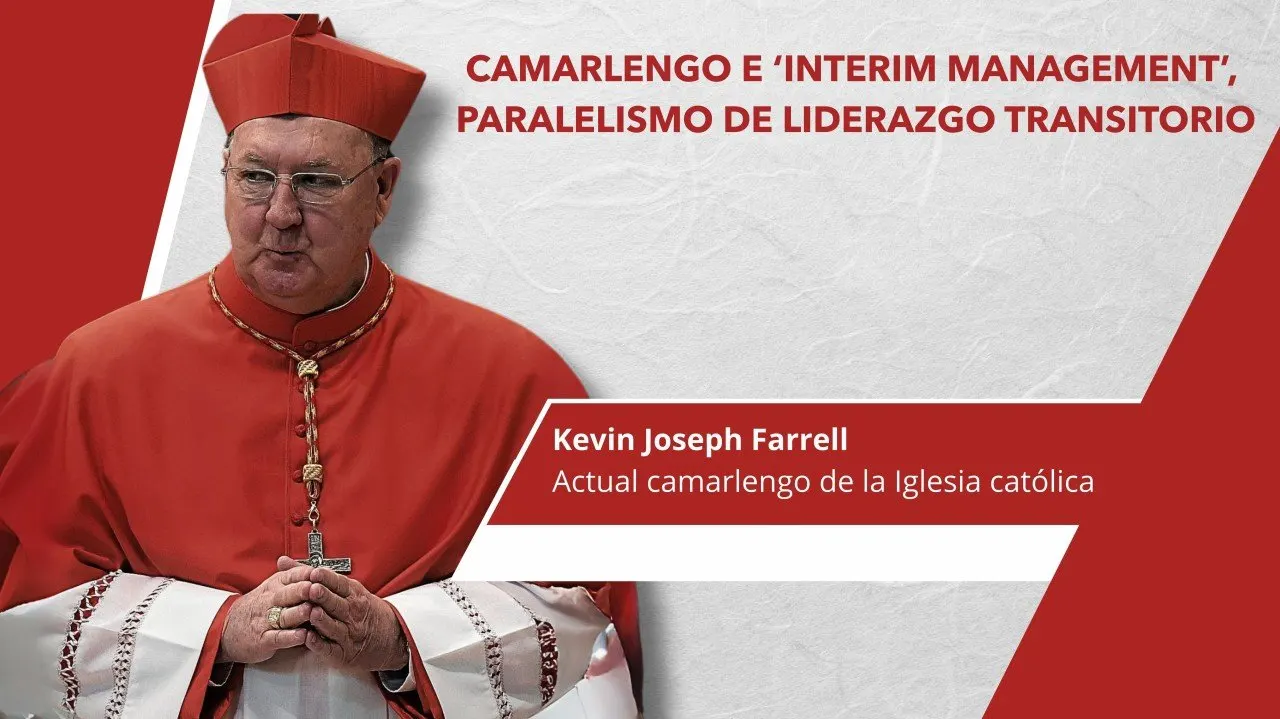
The Camerlengo and ‘interim management’: parallels in transitional leadership
The solemnity surrounding the period of Sede Vacante following the death of a Pope highlights the profound need for a mechanism that guarantees order, continuity and transparency. The Camerlengo, a centuries-old figure within the Catholic Church, plays an essential role in this process, acting with solemnity and impartiality. Similarly, in the business world, the […]
The solemnity surrounding the period of Sede Vacante following the death of a Pope highlights the profound need for a mechanism that guarantees order, continuity and transparency. The chamberlain, a centuries-old figure within the Catholic Church, plays an essential role in this task, acting with solemnity and impartiality.
Similarly, in the business world, the ‘interim manager’ often fulfils a similar role: leading organisations or projects during periods of change or crisis.
An ancient, highly regimented ritual
The title ‘chamberlain’ derives from the Latin ‘camerarius’, which could be translated as ‘administrator of the chamber’, and dates back to the 12th century, when the camerarius served as the financial administrator of the papal court. Currently, he is appointed by the Holy Father whilst he is still alive. Whilst the Pope is alive, the chamberlain plays a more passive and ceremonial role. However, he assumes an essential role and carries out his duties and principal functions once the death of the Supreme Pontiff has been confirmed. At that point, the Camerlengo – who is also a cardinal – must officially verify the Pope’s death through a rite that combines liturgical rigour and solemnity. He also has the assignment of ensuring that the wishes of the deceased Pope are carried out and of organising the wake.
At the same time, he becomes the custodian of the Holy See’s assets, administration and vast patrimony, ensuring that the Vatican’s organisations, finances and the day-to-day running of the Curia continue to function without a full spiritual leader. This is not a matter of unlimited power, but rather an assignment strictly defined by canon law and overseen by the College of Cardinals.
Following the death of Pope Francis, the management of Vatican affairs remains temporarily in the hands of the Cardinal Camerlengo whilst the nine-day funeral rites are held and the period of between 15 and 20 days elapses, during which a conclave is organised to elect the new Pope. This post is currently held by Cardinal Kevin Farrell, who was born in Ireland but has had a long ecclesiastical career in the United States.
The Camerlengo is therefore acting as a sort of ‘acting director’, with the assignment of administering the Church until the election of the new pontiff, albeit with limited powers. It is a role steeped in symbolism and involving crucial administrative duties during a specific period. Vatican protocols are governed by strict rules, and the chamberlain’s authority never permits him to alter the process of the Conclave or the sacramental rituals.
In short, the chamberlain is the one who keeps the machinery running whilst the global Church is between two shepherds.
Corporate leadership
The ‘interim manager’, on the other hand, is a senior executive — such as a CEO, CFO or chief operating officer, amongst others — who is hired on a temporary basis to fill urgent vacancies, lead transformation projects or manage financial or reputational crises. Their value lies in arriving ‘on the ground’, taking on managerial responsibilities and operating with clear objectives and deadlines agreed in advance. All this whilst maintaining business operations and ensuring the transfer of knowledge to internal teams, so that by the end of their assignment the organisation has the autonomy and tools necessary to continue moving forward.
Similarities
Although they come from different spheres, the chamberlain and the ‘interim manager’ share the same principles of conduct: institutional neutrality, as they do not belong to the ordinary government; the temporary nature of their assignment; and the obligation to be accountable with complete transparency. Both ensure operational continuity — the Vatican’s routine in one case, business processes in the other — and leave a legacy of functional systems and teams capable of taking over when their mission concludes.
The key to the success of the ‘assignments’ in both cases lies in a structured approach. First, a rapid assessment of the situation identifies risks and priorities. Subsequently, actions to be carried out are defined, with interim and final milestones that allow progress to be measured. And all of this is accompanied by communication—in the form of regular updates—that ensures transparency, prevents misunderstandings and strengthens the confidence of all those involved.
Lessons for the future
Modern companies can benefit from robust protocols in the event of vacancies: appointing ‘interim managers’, maintaining a ‘pool’ of available senior talent, drawing up communication manuals for times of crisis, and systematising knowledge transfer. In this way, periods of change cease to be power vacuums and become opportunities for institutional and even cultural strengthening.