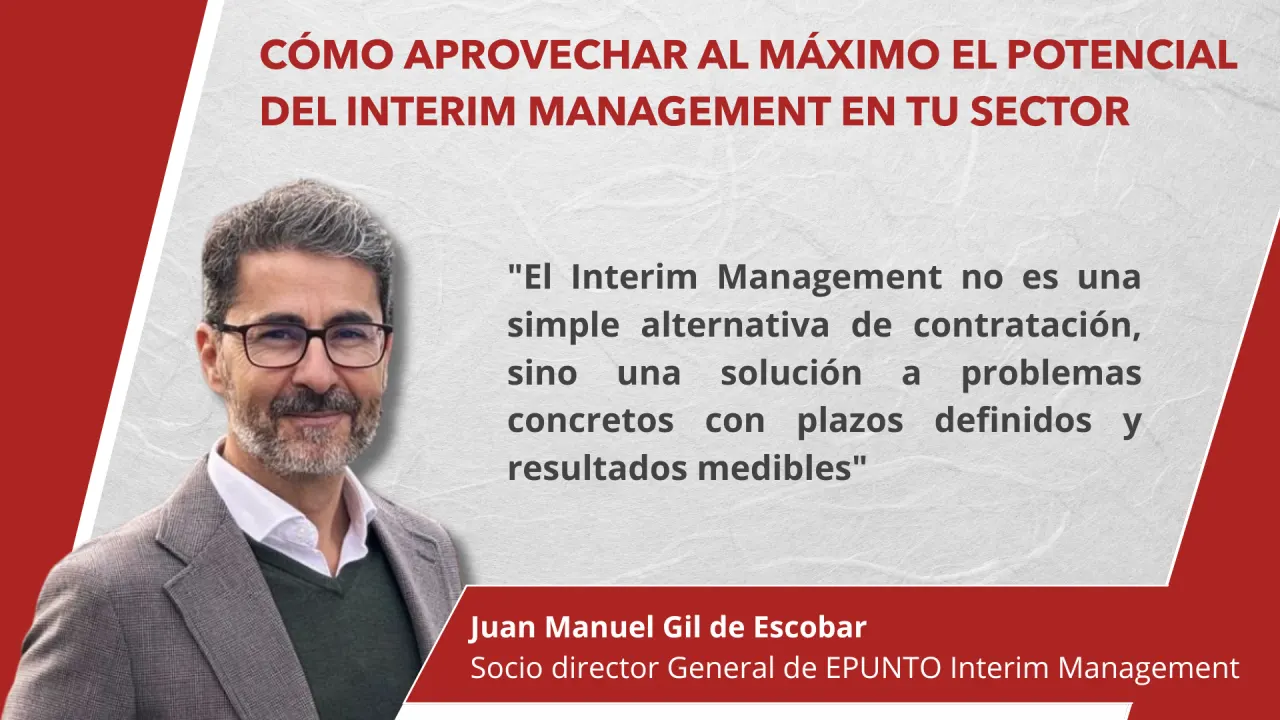
How to make the most of interim management in your sector
Unlike traditional recruitment, where the candidate becomes part of the company’s structure and is managed internally, the interim manager is brought in under a contract agreed with the interim management service provider, taking on the responsibility of meeting clearly defined objectives within a specified timeframe. […]
Unlike traditional recruitment, where the candidate becomes part of the company’s structure and is managed internally, the interim manager is brought in under a contract agreed with the interim management service provider, taking on the responsibility of meeting clearly defined objectives within a specified timeframe. In this way, the organisation can immediately implement its strategy at executive level and benefit from focused leadership that drives the achievement of goals without placing a permanent burden on its organisational structure.
“We define very clear objectives with the client that must be met within a specific timeframe”
To get the most out of the arrangement, it is essential to define from the outset the ‘purpose’ of the appointment. Do you need to fill a vacancy caused by staff leaving, tackle a specific crisis or lead an urgent transformation? Setting measurable milestones – for example, reducing costs by 10 per cent within three months or launching a new sales channel within six weeks – channels all actions towards a single goal. This clarity prevents misunderstandings, aligns expectations and provides the interim manager with a framework within which to make decisions with complete clarity.
Cultural integration and operational agility
An interim manager’s effectiveness depends not only on their experience, but also on how quickly they immerse themselves in the company’s culture. Introducing this professional internally as a strategic ally, setting out their assignment in detail and granting them autonomy, facilitates collaboration and minimises resistance. At the same time, having a clear communication plan that includes welcome meetings, briefing sessions and direct access to senior management accelerates their learning curve. The result is the immediate adoption of agile methodologies that streamline processes and instil a mindset of continuous improvement throughout the organisation.
External perspective and best practice
One of an interim manager’s greatest assets is their cross-sector experience. Having led restructuring, expansion or technology implementation projects in diverse sectors such as the automotive, retail, healthcare and energy industries, these professionals can apply tried-and-tested solutions and adapt them to the company’s specific context. Their recommendations combine the rigour of working methodologies with a deep understanding of market dynamics. This external perspective not only challenges internal inertia but also opens up avenues for innovation that might otherwise go unnoticed.
Change management and situational leadership
Implementing structural or process changes often creates uncertainty amongst teams. In such situations, the interim manager acts as a facilitator of change, combining assertive communication skills with techniques for managing resistance.
How? By organising workshops, chairing executive committees and providing constant feedback to ensure the adoption of new practices.
Their situational leadership—adapting their management style to each phase of the project—ensures that the team remains committed and motivated, reducing the risk of staff leaving or key initiatives stalling.
Follow-up and sustainable transformation
At the end of the assignment, the company is left with a tangible legacy: optimised structures, teams trained in new methodologies and a more results-oriented management culture. This involves not only monitoring performance indicators within the interim manager’s remit, but also assessing the extent of knowledge transfer and the stability of the processes implemented. Fortnightly or monthly reviews, with clear reports and follow-up meetings, enable this legacy to be achieved.
Incorporating interim management into corporate strategy means introducing agility, objectivity and a determined focus on achieving results. The setting of specific objectives, the ability to integrate into the corporate culture, the contribution of external expertise, effective leadership of change and rigorous monitoring transform this temporary role into a genuine driver of growth. In a market as competitive as today’s, this ability to respond and adapt becomes a competitive advantage and a distinguishing feature that drives a stronger market position within the sector.