Growing concerns about absenteeism: how interim management and new ways of working could be the solution
Since 2018, workplace absenteeism (in Spain) or ausentismo (in Latin America) has seen an alarming rise, with a 54 per cent increase in incidents across the board in Spain – a figure that has an impact not only on businesses but also on the global economy. This trend has become more pronounced in regions such as Galicia, where […]
Since 2018, workplace absenteeism (known as ‘absentismo’ in Spain and ‘ausentismo’ in Latin America) has seen an alarming rise, with a 54 per cent increase in incidents across the board in Spain – a figure that has an impact not only on businesses but also on the wider economy. This trend has been particularly pronounced in regions such as Galicia, where especially high rates are reported. It is striking that the group of young employees, aged between 18 and 25, shows the highest rate of absenteeism, with 90 per cent of these absences linked to mental health issues such as depression and stress.
The reality is that absenteeism, beyond being a logistical challenge, directly affects companies’ productivity and stability. In large organisations, the daily number of absent employees can reach 1,000, creating gaps in key teams and putting pressure on internal resources to cover the shortfall.
What does this mean for businesses?
For many companies, this rise in absences translates into structural vulnerability, particularly for those that rely on highly specialised teams or continuous operations. Faced with staff shortages, business processes slow down and organisational stress increases, which in turn creates a downward spiral of low morale and reduced performance amongst the remaining teams.
Interim management and new ways of working as a solution
Generally speaking, interim management and new ways of working can be the solution to reducing absenteeism, for several reasons:
The role of EPUNTO Interim Management in managing absenteeism
It is in this context that EPUNTO Interim Management proves essential. Faced with the vulnerability caused by absenteeism, EPUNTO’s team of interim managers offers an effective solution to ensure business continuity. Thanks to their experience and adaptability, interim professionals can quickly integrate into our clients’ organisational structure, covering critical roles and leading projects during periods of high staff turnover or temporary absences.
With Epunto, companies can benefit from the objective approach of an interim manager, which not only maintains operational continuity but also drives support strategies that reduce the long-term impact of absenteeism. From the implementation of mental health and wellbeing plans to support systems for stress management, our interim managers bring a holistic perspective that helps reduce absences due to these causes. The ability to intervene quickly and effectively ensures that the team does not lose momentum, and that critical projects continue to run with the least possible disruption.
Implementing support strategies that mitigate the impact of absenteeism in a sustainable wayKey strategies for tackling workplace absenteeism
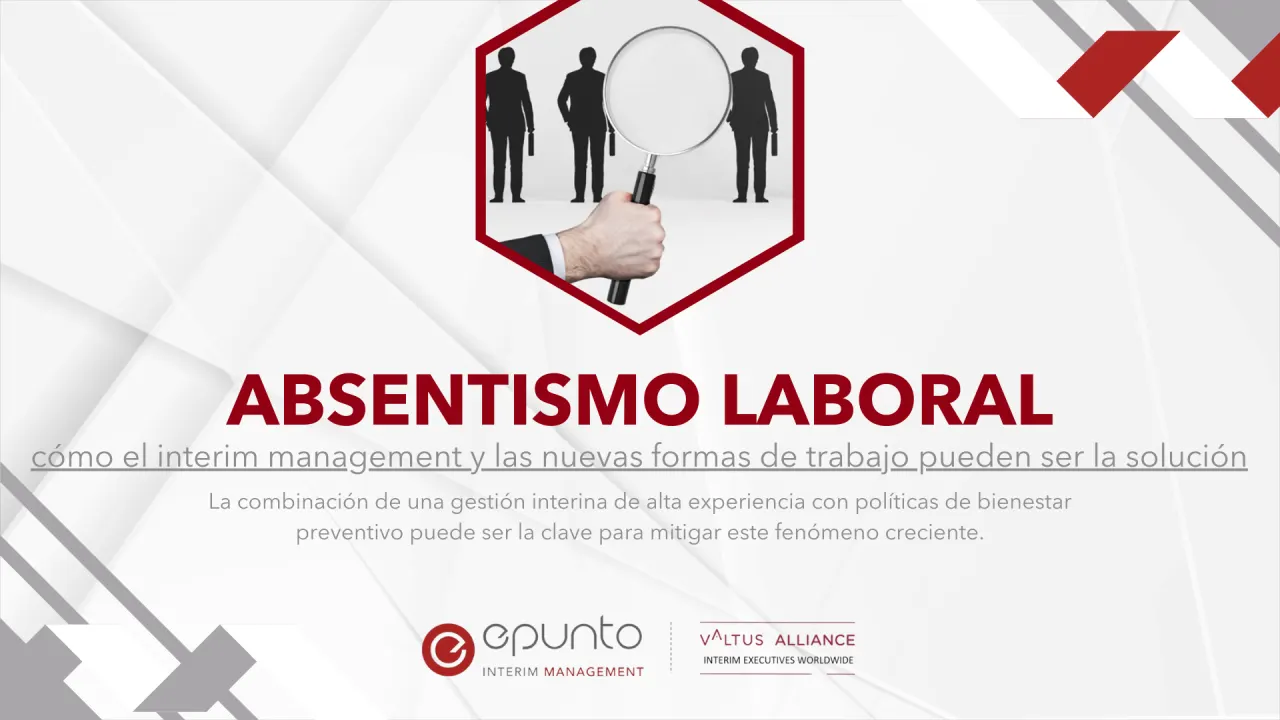
Implementing swift and effective solutions, such as engaging the interim management services of EPUNTO Interim Management, a Valtus Alliance member, is an essential step, but so too is analysing the underlying causes of this phenomenon within the organisation. Combining highly experienced interim management with preventive wellbeing policies may be the key to mitigating this growing phenomenon. As workplace absenteeism continues to rise, it is critical for companies to adopt a proactive approach that not only responds to the emergency but also offers a solution of lasting value.