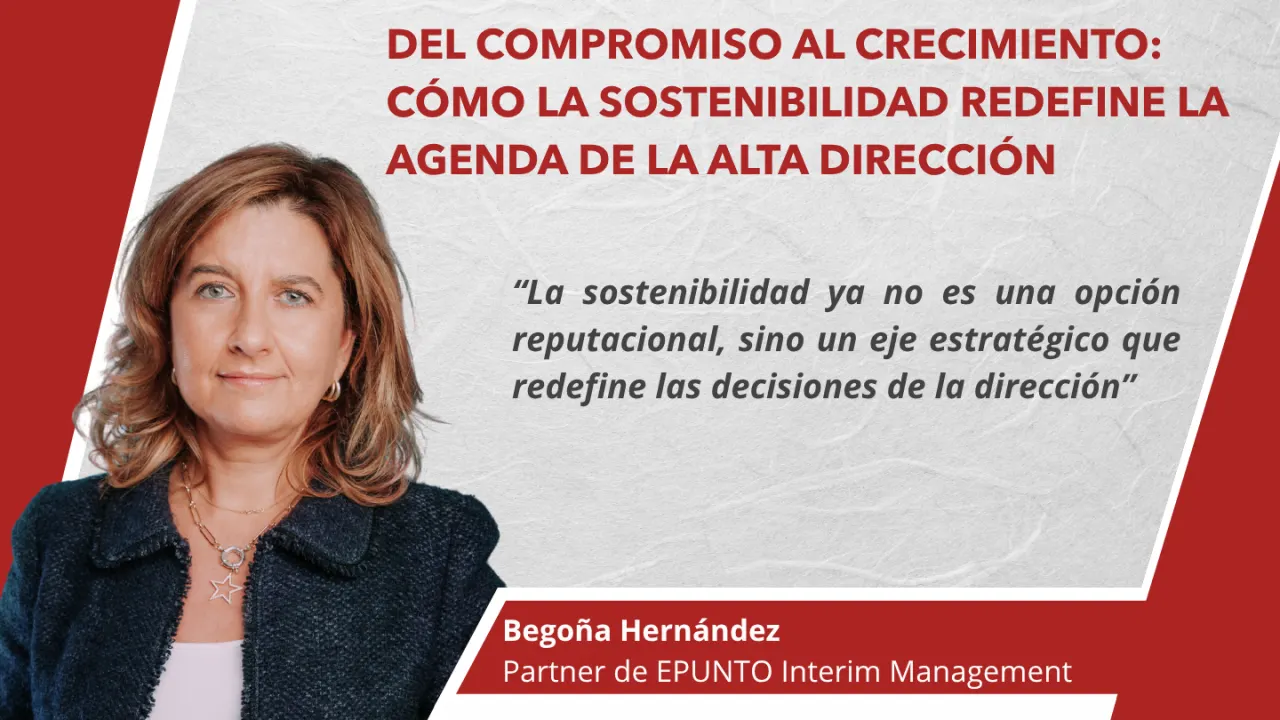
From Commitment to Growth: How Sustainability is Redefining the Senior Management Agenda
From corporate responsibility to business strategy Until relatively recently, sustainability was viewed solely as a matter of corporate social responsibility, relegated to philanthropic initiatives or mere regulatory compliance. However, the current reality is very different; it has established itself as a strategic imperative and a key factor in decision-making […]
From corporate social responsibility to business strategy
Until relatively recently, sustainability was viewed solely as a matter of corporate social responsibility, relegated to philanthropic initiatives or mere regulatory compliance.
However, the current reality is very different: it has established itself as a strategic imperative and a key factor in making strategic decisions. Companies across all sectors — and of all sizes — have realised that integrating sustainability into their business model not only enhances their corporate image and reputation, but also significantly boosts their competitiveness and strengthens their resilience and ability to adapt to a constantly evolving market.
New demands from the market and investors
Consumers today are better informed and far more demanding than ever before. They prefer brands with genuine commitments to sustainability, not merely statements of intent. At the same time, investors and stakeholders are demanding ever-greater transparency in the management of environmental and social risks.
This new context compels senior management to respond to these growing expectations by rethinking their business models and ensuring a balance between profitability and sustainability, whilst aligning with international standards such as the Principles for Responsible Investment (PRI), the SFDR and the CSRD.
Innovation and efficiency as keys to change
Adopting sustainable practices goes far beyond reducing one’s environmental footprint. It involves rethinking and transforming business models to make them more efficient. From optimising supply chains to digitising processes, sustainability is driving operational improvements that not only help to reduce costs but also boost productivity.
Companies that succeed in integrating these principles into their strategic core gain an undeniable competitive advantage in today’s market.
Transformational leadership: Adaptability and long-term vision
To manage this transformation successfully, senior management must demonstrate dynamic and flexible leadership, combined with a clear vision for the future and the ability to navigate complex contexts. However, not all organisations have the necessary skills and profiles in-house to lead this transition effectively.
In this context, collaborating with experts in strategic sustainability, organisational transformation and change management can make the difference between merely paying lip service to the cause and achieving real, measurable implementation. At EPUNTO Interim Management, a Valtus Alliance member, we have over 2,000 interim managers in our database, including profiles specialising in sustainability and corporate social responsibility with extensive track records and experience in this sector.