
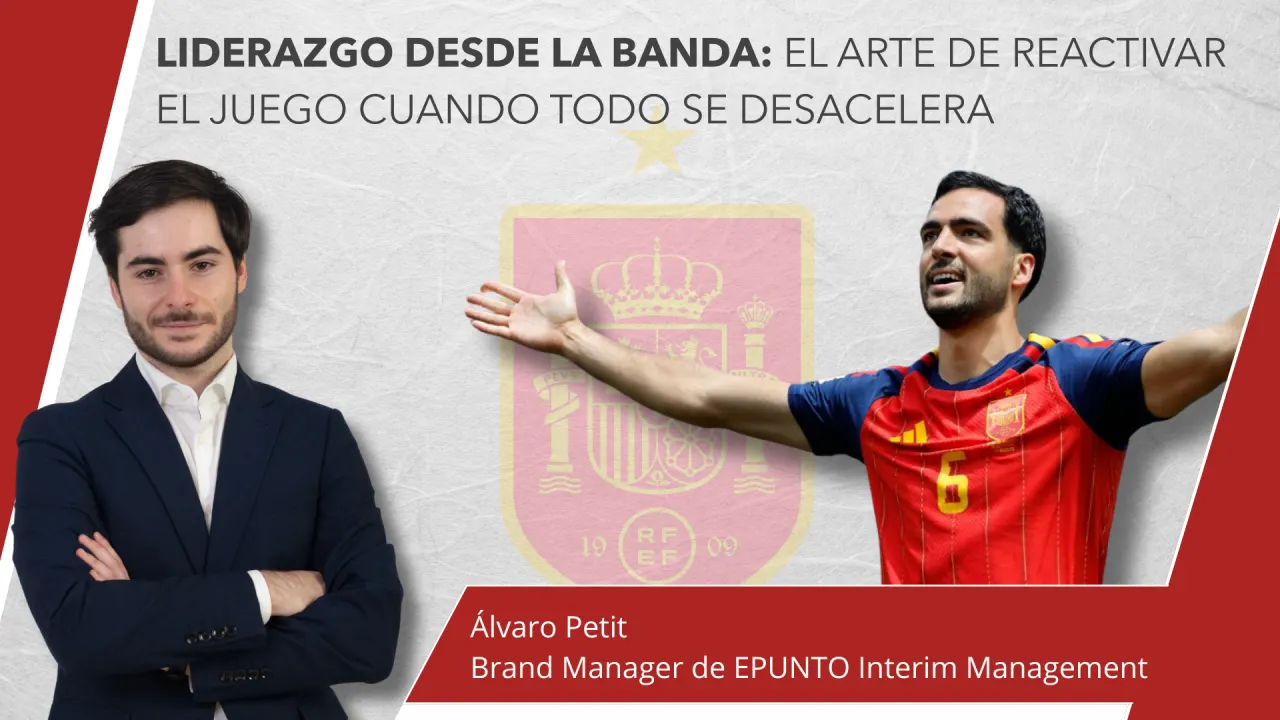
Leadership from the touchline: The art of getting the game going again when everything slows down
When we watch a match of the calibre of a World Cup final, it is easy to be impressed by the pace of the wingers or the flair of the young prospects who break through the defences. However, true analysts know that major tournaments are rarely won solely
When we watch a match on the scale of a World Cup final, it’s easy to be impressed by the speed of the wingers or the flair of the promising young players who break through the lines. However, true analysts know that major tournaments are rarely won by the starting eleven alone.
It’s the 70th minute. The score is level and the atmosphere is tense, perhaps even verging on pessimism. The opposition have dropped deep, fatigue is beginning to take its toll on the first-team players and the match is, inevitably, stalling. It is at this very moment that the manager looks to his bench in search of a very specific solution: the veteran player.
What happens when a company is going through a difficult phase and needs a change of pace?
At EPUNTO Interim Management, we experience this very reality every day in the business world. We fully understand that look on the face of the CEO or the Board of Directors – the manager – when their company’s ‘match’ enters a critical phase and needs an immediate change of pace.
Because that veteran player, who steps onto the pitch at the moment of greatest tension, doesn’t need to be told what it means to compete under pressure – he’s already played in dozens of decisive matches. His mission isn’t to pull off the most spectacular move of the tournament, but to bring the order and mental clarity that the whole team needs at that crucial moment.
Mikel Merino and interim management: an experienced talent who turns the match around
To understand the impact of this profile, one need only look at Mikel Merino’s role in the 2026 World Cup, hosted by Mexico, the United States and Canada. Established as the Spanish national team’s ‘super-sub’ and Luis de la Fuente’s trusted tactical asset, the Navarran midfielder perfectly embodies the role of this invaluable game-changer.
After spending minutes on the bench, his reliability and maturity saw him become the hero who secured the vital 2–1 victory over Belgium in the quarter-finals, with a spectacular goal in the dying minutes of the match, scored just 115 seconds after coming on. Something similar had happened previously in the match against Portugal: the Pamplona-born midfielder, who plays for Arsenal, scored in the 90th minute, just six minutes after coming off the bench. Likewise, in the recent, gruelling semi-final against France, he came on in the 77th minute to bring a sense of calm, organise the midfield and protect the lead ahead of the historic 2–0 victory.
In the face of the rashness that energetic youth can sometimes bring in high-pressure situations, Merino displayed the cool head needed to secure the result and pave the way to the final in New York against Leo Messi’s Argentina.
Recommended by LinkedIn
We’re a great team Carlos Jirash 2 years ago The strength of Betis Jesús Botello 1 year ago The new Betis Jesús Botello 1 year agoWhat skills does an interim manager need to take action at critical moments?
When we assign a client to one of our interim managers, their impact is felt in three key areas:
- Immediate assessment of the situation (‘express onboarding’): Just like a player capable of spotting the opposition’s weaknesses from the sidelines before coming on, the interim manager arrives at the company with an almost immediate ability to assess the situation. There is no learning curve; from the very first minute, they know exactly where to position themselves.
- Guidance and direction for ‘junior’ talent: Organisations are full of young, dynamic and brilliant talent. However, in situations of structural crisis, that drive can lead to rash decisions and, ultimately, to mistakes. Like a captain on the pitch, the interim manager organises the team and passes on their experience so that younger professionals can perform better.
- Results-oriented: Their involvement has a clear beginning and end. They do not take to the pitch to play the full 90 minutes, but to fulfil a specific mission: to restructure debt, open up a new market or lead a management transition. Once the result is secured, their work is done.
“When fatigue clouds the team’s judgement, the fresh perspective and experience of someone who has watched the match from the sidelines is worth more than any tactical system.” – Álvaro Petit, CEO of The LIQUID finance & BM at EPUNTO Interim Management
No club or company can keep every specialist in the world in its ‘starting eleven’ (it would be financially and operationally unsustainable). The strategic acumen of a good manager – the client – lies in knowing when to call upon external talent and who to call. Because, as Álvaro Petit, CEO of The LIQUID finance – a sister firm of EPUNTO Interim Management specialising in financial services for SMEs – illustrates, “effective management of the bench is the manager’s most valuable resource on the pitch; and the same applies in the business world”.
This is the foundation of our firm’s value proposition. At EPUNTO Interim Management, we are in charge of that elite bench. Our job is to understand exactly what kind of ‘match’ your company is playing, which areas can be improved and what specific skills are required.
As we prepare to enjoy this historic World Cup final and hope for our national team’s victory, we invite you to ask yourself a crucial question about your own organisation: if your company’s match were to stall in the second half today, who would you turn to on the bench?