“There are fewer and fewer jobs and more and more work. We are swapping employability for workability.”
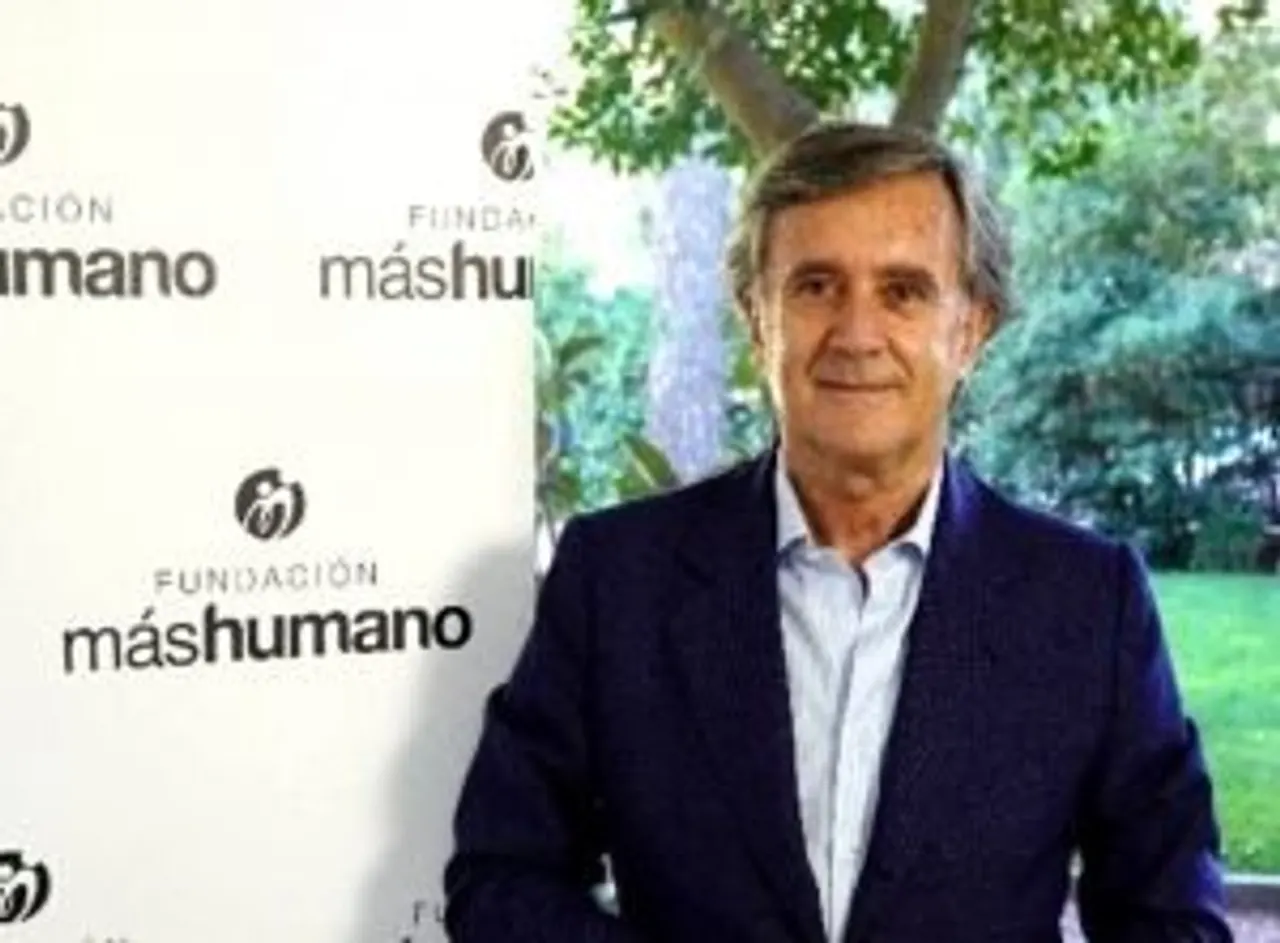
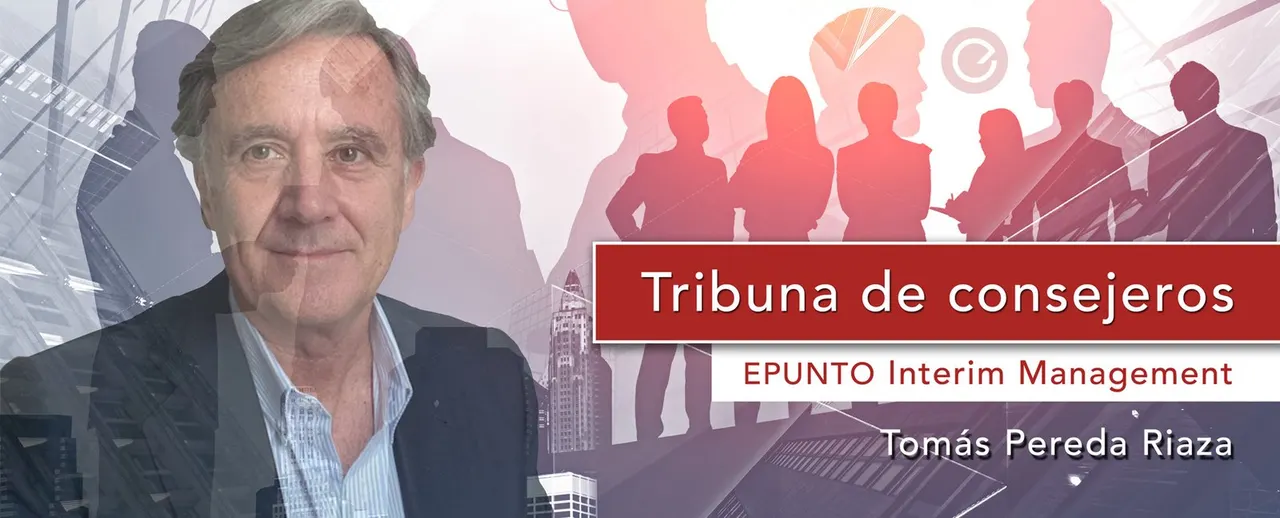
Tomás Pereda, Deputy Director-General of the Máshumano Foundation, has been a member of the Advisory Board of EPUNTO Interim Management since June 2020. Drawing on his extensive experience and expertise in talent management and organisational cultural transformation, he contributes his strategic vision in the field of flexible leadership, through this and other advisory boards to […]
Tomás Pereda, Deputy Director-General of the Máshumano Foundation, has been a member of the Advisory Board of EPUNTO Interim Management since June 2020. Drawing on his extensive experience and expertise in talent management and organisational cultural transformation, he contributes his strategic vision in the field of flexible leadership, both through this and other boards on which he serves. Convinced of the value that senior talent brings and the importance of intergenerational teams, in this interview he reveals what the key factors might be for the advancement and consolidation of interim management in Spain.
As well as being a member of the Advisory Board of EPUNTO Interim Management, you are also a member of the Board of Kreab Spain and the Tomillo Foundation, a trustee of FUNDIPE, a collaborator with Sagardoy Business & Law School and the Transforma España Foundation, a facilitator for Cultural Transformation at Minsait (Indra) and a weekly contributor to Capital Radio’s ‘Foro de Recursos Humanos’ programme. Apart from experience, what does a professional with your extensive background bring to organisations through your advisory roles, and vice versa?
It is a reciprocal contribution, not only in the activities I undertake, but also through the learning involved. Throughout 35 years of my professional life in the corporate sector, I have been very focused on a large corporation that absorbed all my mental energy, and the only thing that distracted me slightly was my passion for teaching, which has always allowed me to step back a little from day-to-day work – something very useful for gaining perspective. In this new professional phase as a director, I try to shift my mindset, engage with different realities, and embrace a form of learning that might be described as ‘naive’ – not that of a highly experienced professional, but of someone who has a great deal to listen to and learn – and this proves very rewarding. Experiencing different realities, different businesses and challenges, getting to know people and cultures – all of this brings me great satisfaction and fosters my intellectual and professional growth.
As for what I bring to the table as a consultant, fundamentally, it is an experience in which I force myself to start from scratch. I try to ensure that my biases and past experiences do not cloud my view of the issues presented to me; I analyse them carefully, offering my advice and perspectives. Undoubtedly, the accumulation of diverse experiences throughout my life and my contribution to various organisations enriches them. I wish to emphasise the importance of using active listening as an essential tool in the role of a adviser; this is fundamental because there is a risk of arrogance on the part of someone who has lived through many experiences – a flaw all too common amongst people of a certain age and experience. We senior professionals tend to believe we know a great deal because we have lived through so much; however, if we stop there, we are making a very serious mistake, both in form and substance. We must be aware of this and have the ability to combine and integrate that expert perspective with the utmost humility, so as to listen very carefully and draw on our experience to provide solutions, always putting ourselves in the shoes of the person we are advising. This is what I can contribute as an Advisory Board Member.
Being a member of the Advisory Board at EPUNTO Interim Management is very interesting. It is a platform shared by companies that come looking for the services of a senior professional – the very essence of EPUNTO Interim Management – who may be chosen for various reasons. In my case, I have reached a point in my professional career where I am drawn to variety and short-term engagements in certain collaborations; naturally, these are circumstances that are better suited to a senior profile than to a younger one. Furthermore, it is very important, from the perspective of a director, to observe the significant changes taking place in the corporate world and, in this specific case, the reasons why a company seeks a senior professional for a specific period of time to fill a position in senior management. What factors or changes are taking place in our ‘job market’ – not to be confused with the labour market; it is important to distinguish between the two terms. More and more often, I find myself repeating a phrase I came up with some time ago, and I’m pleased to hear it increasingly frequently from other professionals: ‘there are fewer and fewer jobs, but more and more work’. That’s right, because we are shifting from ‘employability’ to ‘workability’; it is about meaningfully incorporating the concept of ‘work’ alongside the traditional concept of ‘employment’ as a trend that represents a shared aspiration. I believe the labour market is moving very rapidly towards the concept of ‘work’, which is much broader and more comprehensive of today’s professional and business reality. The myth of ‘employment’ still carries a lot of weight; in other words, the search for a job – even if it is precarious – prevails in the Mediterranean mindset. However, the world of work is moving in a different direction. This may take the form of self-employment or self-directed work, freelancers, the gig economy, or unconventional arrangements for which, in some cases, we do not even have a name – and this is where work is growing globally. The fact is that I do not yet feel able to make a sufficiently well-founded assessment of whether this trend is good or bad, but it is happening; that is a fact, and it will have its pros and cons. In any case, it requires a re-evaluation of our paradigm, which emerged from the last industrial revolution. We are the heirs to a 150-year-old industrial tradition, in which large corporations provided employment for vast numbers of professionals, in the primary and secondary sectors as well as the service sector, and as a result, the traditional employment model was established. Current trends indicate that, alongside this, a a new one that requires a fresh perspective from the point of view of regulation and even social protection because, whilst it is true that greater flexibility and a greater breakdown of those bonds of stability and protection provided by the traditional model that existed 50 or 60 years ago, the current situation calls for a review of the social contract itself, as it may increase the vulnerability of workers who, until now, were supported and protected by those large corporations under the traditional employment model, a situation that contrasts with the greater vulnerability inherent in non-conventional ways of working.
As there are increasingly more self-employed professionals, subject to greater variability and a more precarious situation, greater social protection will be needed. I am referring, for example, to universal basic income or other schemes devised for this new era. We are beginning to discuss concepts which, setting aside ideological divides, we need to start debating objectively and from the perspective of the future towards which we are heading.
There is no doubt about the need for and suitability of interim management in the Spanish business environment; however, although much progress has been made in recent years, this form of management service has not yet attained the same level of importance in Spain as in other European and Anglo-Saxon countries. What do you think are the reasons for this?
I believe there are always certain cultural traits that come into play; for example, one such reason is the concept of ‘tribe’. Typically, senior management involves not only commitment to a project but also commitment to a group. What I mean is that one of the barriers to engaging interim management services is this mindset: ‘How can I hire an executive in January who’s going to leave in October? I need to put them through the “tribe” test to see if they’re really one of us’. And perhaps they’ll then go off to the rival ‘tribe’—who are competitors—or perhaps they’ll only work four or five working days for that company and then have a separate professional life. What I mean is that senior management has always had that connotation of a ‘close-knit group’, of ‘one of our own’. On the other hand, this view of loyalty to the team—rather than to the project—and always linked to being physically present, runs counter to current trends, particularly in the wake of the Covid-19 pandemic, which has broken down the barriers of space and time. The possibility of working asynchronously and from anywhere in the world has proven to work, to the extent that a company can have a member of its management team based anywhere in the world and still have them be a cornerstone of the project. But of course, this approach is still very disruptive to our Mediterranean mindset and has a lot to do with the concept of hierarchy; in other words, as a manager, I need my staff in the office and to see them every day. From the managers’ point of view, this is even more pronounced, but it runs counter to a growing trend; in fact, in my experience working in multinationals where we operated globally, physical presence was non-existent as we managers were spread across different continents. Every day we had various activities that we shared and managed in real time via video conference or by telephone; we were members of different senior management teams and it worked very well. That global multinational culture, which operates in real time and within a global context, has not, I believe, yet taken root in companies with a more local culture where the concept of a ‘tribe’ still carries considerable weight, except in specific and exceptional situations where they have no choice but to fill a management position as a matter of urgency – for example, during a reorganisation. Culturally, Spain still has some resistance to collaborative models, such as interim management, but I believe we are moving in that direction; in fact, it has been marketed for years now and is becoming increasingly accepted. In this regard, it is important to bear in mind the difference between hiring an interim manager directly and doing so through a specialist firm, as the selection processes they carry out and the guarantees they offer their clients regarding interim management services undoubtedly represent added value for the contracting companies, to which it should be added that this model for contracting services fits perfectly within our labour law framework. Furthermore, it is necessary to distinguish between a theoretical interim manager and an unemployed executive who is seeking employment in the traditional way, rather than taking on the executive management of a project on a temporary basis in order to move on to another one subsequently, based on their professional qualities. In this regard, interim management firms tend to provide genuine interim managers – that is, people who enjoy carrying out a variety of projects, in different companies and for specific periods of time. The truth is that we are increasingly moving towards a model in which talent is internal, but may also be external and involved on an ad hoc basis and in specific situations.
Internal, permanent talent is just as important as external, temporary talent, and senior management must know how to manage these talent ecosystems effectively.
It is true that there is the so-called ‘theoretical interim manager’ who is unemployed and makes use of an interim management service – either hired directly or through a specific agency – to prove their worth and secure a permanent position. In reality, these professionals are not interim managers; they are professionals seeking – quite legitimately – to secure a position in a company that will hire them on a permanent basis. It is human nature and understandable, but it has nothing to do with interim management; that is why it is so important to have firms that manage this matter properly.
This form of executive management service is proving that, due to its flexible nature, it is a clear competitive advantage for companies, as well as offering mutual enrichment for the client, since interim managers bring a fresh perspective and break the insularity that the inertia of time creates in any organisation. When a professional with extensive experience across various fields, countries and cultures eventually joins a company, they greatly enrich the permanent management team. It is often the case in a management team that its regular members end up all thinking the same way about a particular issue; when an external manager steps in, they bring a different perspective that helps to contrast ideas, facilitating a fruitful debate that leads to the most appropriate decisions.
His professional career over the last 35 years has always been linked to human resources management and people development in leading companies such as Unidad Editorial, Hertz, Iberdrola, IKEA, Merck, Leche Pascual and Dupont, amongst others. What are the challenges currently facing organisations, and how do interim management firms fit into this transformation?
Culturally speaking, the challenges are immense. Over the last two years, the world has changed far more than organisations have, from a cultural perspective. I anticipate that several irreversible changes will result from this crisis. The first is that there will be a major ‘shuffle’ of talent at executive level. There are many professionals considering changing companies and companies considering replacing their executives. In fact, since May 2021, statistics from the US show that 2.7 per cent of professionals have changed companies as a result of the changes brought about by the pandemic, particularly with regard to new ways of working. This is the highest figure ever recorded in the labour market; it is expected that the same will happen in other regions, and Europe will be no exception. Obviously, interim management is an option that is available and can resolve specific situations. It represents a professional and personal re-evaluation in the wake of the crisis caused by Covid-19, where the world has suddenly leapt forward by six or seven years in certain areas, such as digitalisation and different ways of working that offer greater flexibility and autonomy. There are professionals who have not risen to the challenges over the last two years (2020/21), just as there are companies that have also failed to rise to the occasion. In this situation of rapid change, many will be switching sides – in both directions. Professionals best adapted to change are seeking out companies that best meet their expectations, lifestyle, values and the demands of the market; this will happen in the short term – in fact, it is already happening. The crisis has prompted many people to rethink their personal and professional priorities.
There has been a shortage of talent for years. We continue to live with the contradiction of having extremely high unemployment rates, whilst, every year, between 150,000 and 200,000 job vacancies remain unfilled because suitable professionals cannot be found. It is clear that something is happening to prevent companies from finding the professionals they are looking for and, conversely, to prevent thousands of professionals from finding a job that matches their training and experience. We need to rethink what I call the ‘value proposition for talent’, which used to be known as the ‘value proposition for the employee’ However, as the concept of an ‘employee’ is becoming blurred and talent can be found both inside and outside organisations, whilst the value proposition is no longer meeting the expectations of many professionals, a situation is arising in which both parties must reposition themselves and seek a common ground where they can mutually satisfy their needs.
I would like to clarify very briefly what talent is, so that there is no confusion in this regard: ‘Talent is what a professional possesses when they combine the professional qualities and experience that an organisation needs at a given time, and when that person is keen to work within that culture, in that organisation and with that team’. I emphasise the concept of ‘willingness’ – a distinguishing factor compared to the traditional model whereby a person is simply qualified to fill a specific management role.
The fact that a professional ‘is keen’ to get involved in a project is essential to the success of their role within the organisation.
In recent years, and particularly in companies linked to the technology sector, or in organisations of all kinds that have decided to prioritise much more digitally-oriented profiles, I have observed that they recruit professionals with more than enough talent to fill these roles, but they end up leaving when they realise that the digital transformation undertaken by the organisation they’ve joined is more theoretical or for show than genuine. Such a person has the knowledge, attitude and experience necessary to tackle and overcome the challenges the company faces; however, that enthusiasm and drive they once had are dampened when they encounter highly hierarchical companies, based on a traditional concept of status, a style of management that allows no autonomy, excessive rigidity, or any other obsolete organisational concept, with the result that they stay for three or four months before moving on to other companies that live up to their professional expectations. Organisational changes must stem from a cultural transformation; otherwise, only superficial changes occur that lead to nothing positive. It is worth recalling, or citing as an example, the trend towards the implementation of agile methodologies, to demonstrate that when the mindset of senior management does not change, nothing actually changes in reality. No matter how many processes or how much technology you introduce, unless change comes from the top, it is impossible to achieve a cross-organisational change that positively affects the entire organisation.
Returning to the subject of cultural change, some very significant developments have taken place within this vast, forced experiment where, for better or worse, it has been demonstrated that there are other ways of working which have functioned relatively well, based, above all, on two concepts: flexibility and trust. Many other variables stem from these. Those who have experienced this new culture will not forget it, and if it is not present in their organisation, they will leave. How to foster this culture of greater flexibility and trust within organisations—with all that this implies in terms of greater autonomy and a heightened sense of responsibility—is closely linked to the well-known agile methodologies. That said, attempting to return to the models of 2019, prior to the pandemic, will be very risky for most organisations – not to say fatal. It is naïve to expect to return to a past that no longer exists. There is going to be a significant disruption to many things, and this represents one of the challenges currently facing professionals and organisations.
Returning to what I mentioned earlier about the paradigm shift from ‘employment’ to ‘work’, where the management of talent ecosystems is crucial – with the gig economy, freelancers, interim management, bespoke roles, contractors, etc. Unconventional working arrangements are emerging – some have names, others do not – and in many cases, they represent a greater pool of talent than that available within the organisation itself, through its employees. In the world of people management, we always talk about the employee experience or the value proposition for the employee, but it is now necessary to move towards a much more open concept in line with the current needs of organisations.
Ultimately, there will be more and more people who are not employees – that is, external, high-value workers hired to carry out specific projects – than there are permanent employees. Knowing how to manage this reality is the major challenge facing companies.
EPUNTO Interim Management burst onto the Spanish market with this specialism, bringing a fresh and innovative vision based on talent management and making that talent available to companies, both in Spain and across the rest of Latin America. As part of its international expansion, EPUNTO I.M. has joined the Globalise Alliance, which has a presence across all five continents. Was this a strategic decision, given the low demand for these services amongst Spanish businesses? What is the best way to capitalise on this great opportunity?
I would say there are two factors that I consider relevant. The first is the internationalisation of talent, but not so much in terms of geographical location – ‘I have people in different countries’ – as the fact that the person I need could be anywhere in the world, and could even be working remotely from anywhere. In other words, it’s not that I need an executive to send to Argentina or South Africa; no, it’s that this professional can live in their own country – they might need to come to the parent company for a few days – but if they’re based in the country where I have the need, it doesn’t matter at all that they continue to work there whilst we maintain a remote working relationship. This follows the experience we’ve had on a global scale, which has shown that work is neither bound by time nor place. For this reason, I believe it is highly significant that EPUNTO Interim Management has joined a global network capable of providing executive management services in any country. This is the way forward.
The second issue or factor to bear in mind is the speed at which everything is happening in the field of science and technology for large organisations; this means you cannot expect to possess all the skills you need today, let alone those you will need tomorrow. You can aim to have the capabilities you need right now and for the next six months, but, in all likelihood, within a year you will discover that what you learnt today is already falling short; new capabilities will emerge, and these may be found anywhere in the world. That is why it is very important to have a channel or a way of incorporating capabilities flexibly – even ‘renting’ them as and when they are needed – which means moving away from bringing them in-house on a permanent basis. For example, it is very difficult for professionals working in the technology sector to be experts both in current knowledge and in what will happen over the next three years; it is better to ‘hire’ that talent and that knowledge whenever it is needed. You can always find out where the best talent is and hire them or contract their services through an interim management firm, for example. Just as we talk about ‘software as a service’ (SaaS), why don’t we talk about ‘talent as a service’ (Taas)? There are many professionals who do not wish to be employed by a company and prefer to work on a project basis for a fixed period, partly because committing themselves to a single company for several years can lead to a loss of value, as they run the risk of becoming obsolete.
As well as offering interim management services, EPUNTO Interim Management also carries out executive recruitment processes, utilising state-of-the-art technologies such as augmented intelligence.Based on your extensive experience with these kinds of processes, how do you view the use of such procedures in the selection of senior executives, and what does the future hold for talent management at executive level?
For example, augmented intelligence combines the best of human judgement with the best of technology; in this sense, its use in recruitment processes does not replace that human touch, which is why I consider it appropriate. I have recently spoken about the risk of algorithms coming to account for one hundred per cent of the decisions affecting people, whether in recruitment, termination of employment or dismissal. The risk lies in thinking that the algorithm makes quick decisions based on data, but this data overlooks the human factor, and that human touch is essential. Technology for locating and gathering information about candidates in predictive analyses for an initial screening can be of great assistance to the person carrying out that process – though, I must stress, they must never lose sight of the human aspect. However, I am very cautious about the application of technology to people and am in favour of striking a balance in all areas.