

The 5 challenges of digital transformation
Business owners and managers receive a great many messages about digitalisation every day, as illustrated by the following selection: ‘We can advise you on defining the right digital strategy’ “We’re your best technology Partner – hire our services” “Train your staff to go digital” “Apply for funding for your digitalisation” “We can analyse your level of […]
Business owners and managers receive a great many messages about digitalisation every day, as illustrated by the following selection: ‘We can advise you on defining the right digital strategy’ ‘We are your best technology Partner – hire our services’ “Train your staff to become digitally proficient” “Apply for funding for your digitalisation” “We can analyse your current level of digitalisation” “We’ll manage your digital innovation grants for you” … But these messages fall on deaf ears because they come up against a wall, built up over many years, which is difficult to break down. This wall hinders the progress of digital transformation, for at least five reasons, which we list here:
1. A lack of understanding of digital challenges hinders the development of an effective strategy.
Business owners and managers lack the skills needed to recognise the impact a digital strategy would have on their companies’ competitiveness, and they delay decisions until it is sometimes too late.
2. Organisational culture hinders transformation.
As Drucker, the father of management, said: ‘Culture eats strategy for breakfast.’ An excellent digitalisation strategy may end up gathering dust in a drawer because the organisation rejects it; the culture expels it as a foreign body.
3. Dissatisfaction with key suppliers.
Although it is strategic, digitalisation is not the company’s ‘core business’, and it is necessary to rely on various suppliers, whether in technology, consultancy, training or human resources. The identification, recruitment or supervision of these key suppliers is crucial to the success of digital transformation.
4. Difficulty in attracting, training and retaining talent.
Once the strategy has been defined and digitalisation has begun, it is the people within the organisation who must embrace the changes. To achieve this, they must be properly recruited, trained and retained to prevent a brain drain.
5. Weaknesses in the management and leadership of digital transformation.
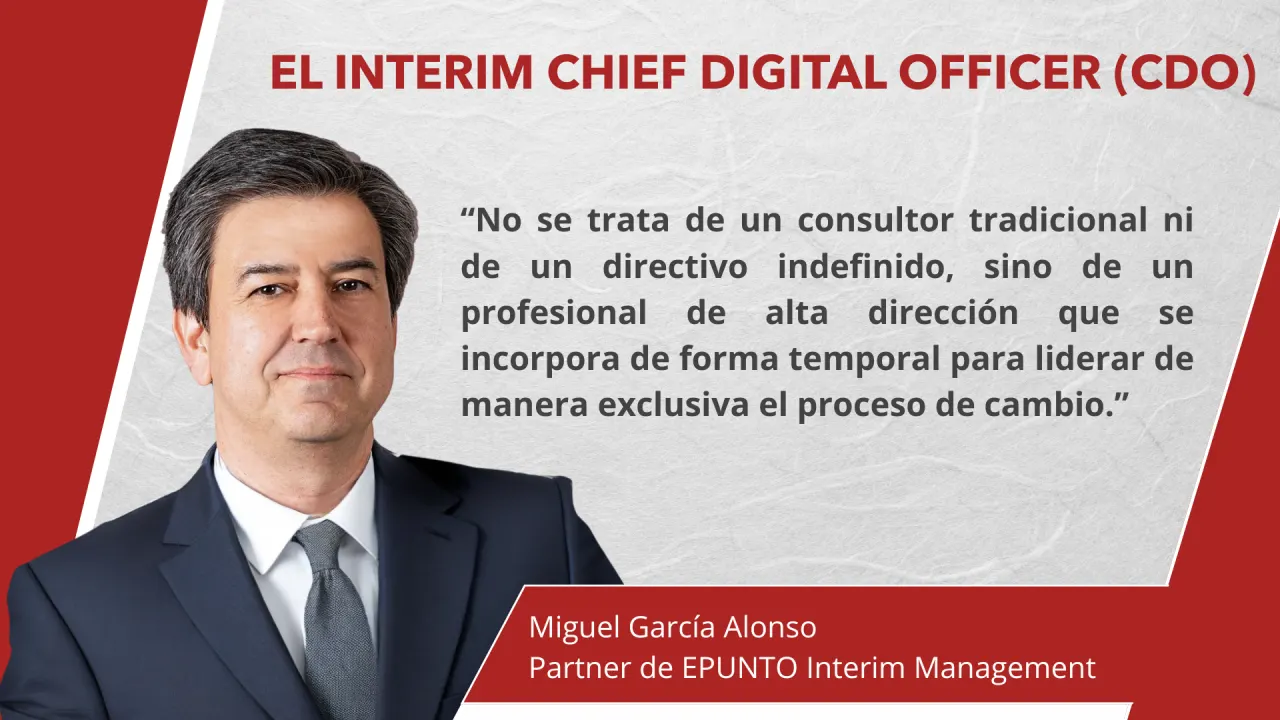
This is the real missing link in digital transformation. We can call this role many things: systems director, IT director, head of IT, CTO, CIO, CDO (chief data officer)… but the entire process must be led and managed by a professional with the right skills, who can ensure costs and deadlines are met, and, of course, guarantee the expected outcome. No big deal.
Companies that already have such a professional on their team are in luck. If their management teams do not include someone capable of leading the change, they are in luck: they can bring in an Interim Manager to take charge of leading and managing the digital transformation for as long as is strictly necessary and in line with pre-defined objectives.