
Leadership in the Age of AI
AI is an extraordinary co-pilot when it comes to analysing data, but strategy, ethics and governance cannot be programmed. Emilio del Prado, CEO of EPUNTO, reflects on management decisions that remain — by law and by their very nature — human.
What machines cannot replace
Given the sheer volume of articles and opinions on artificial intelligence (and the replacement of human tasks that these often mention), it is highly advisable to pause and reflect. The technological debate is fascinating, but it often overlooks one fact: there are managerial functions and activities that are irreplaceable, not only because of the value they bring, but also because they are protected by law.
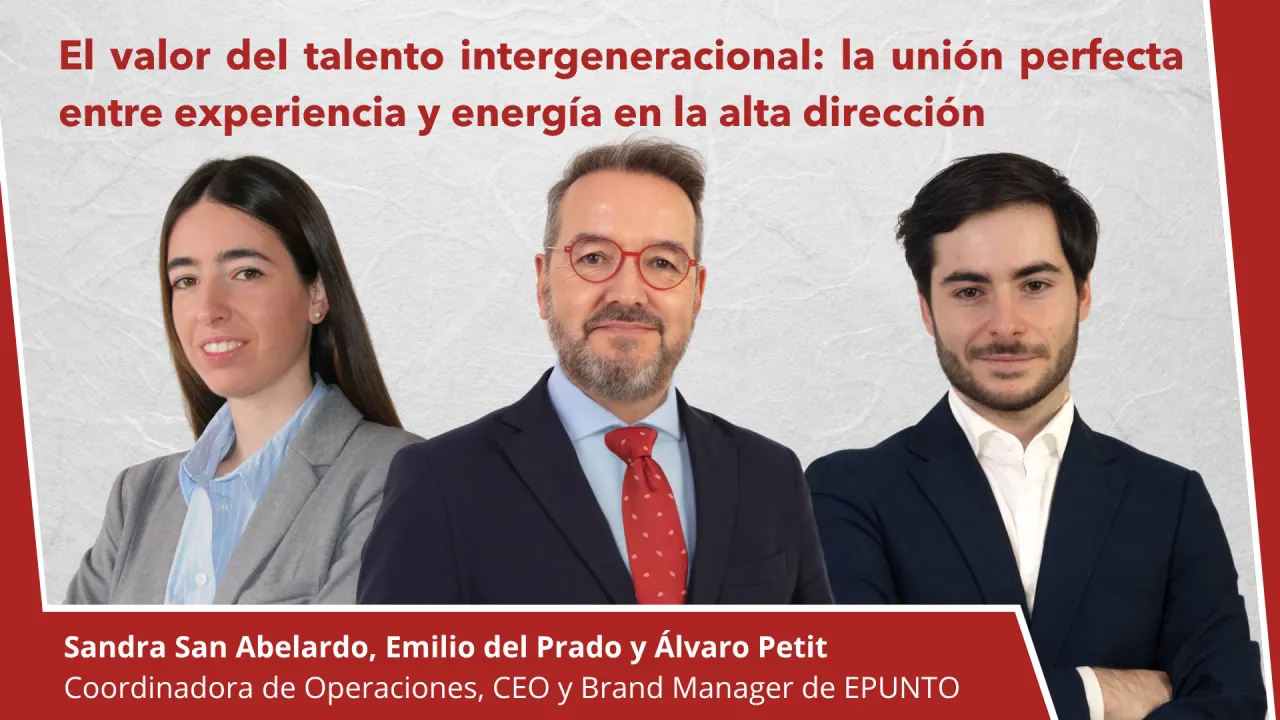
As Emilio del Prado, CEO of EPUNTO Interim Management, points out, “AI is an extraordinary co-pilot for analysing data and projecting scenarios, but strategy, ethics and governance cannot be programmed. True leadership begins precisely where the machine’s predictive capabilities fall short”.
Decisions that require human accountability
In Spain and the rest of Europe, the regulatory framework governing limited companies clearly stipulates that the management of a company must involve a natural person whose role cannot be delegated. An AI system may suggest the most efficient option or calculate a risk, but the final decision and responsibility for its consequences continue to rest exclusively with individuals.
Among the set of non-delegable duties associated with senior management and corporate governance, the following can be highlighted:
- Preparation of annual accounts: Preparation, signing and presentation of the financial statements to the general meeting of partners.
- Defining the overall strategy: Setting the direction of the business, investment policies and comprehensive risk management.
- Supervision and appointment of executives: Selection, assessment and remuneration of key positions within the company.
- Approval of corporate transactions: Decisions on mergers, acquisitions, alliances or restructuring.
- Legal and institutional responsibility: Being directly accountable to Partners, regulators and the market for the decisions taken.
“We can rely on a predictive model to evaluate a business plan, but the commitment, ethical judgement and responsibility lie with the manager.” — Emilio del Prado
Regarding these regulatory – and ethical – boundaries, del Prado states that “we can rely on a predictive model to evaluate a business plan, but the final say, ethical judgement and responsibility rest with the executive. Regulation in Europe will continue to uphold this requirement: the final say and the public face will always be that of a person”, notes the CEO of EPUNTO Interim Management.
Why does a decision led by a person motivate us more than one led by a machine?
Beyond legislation, the essence of leadership lies in our relationships with people. It is similar to what happens when we read a story: it moves us in a different way to read a book or listen to a song when we know there is a real personal experience behind it. If we know it has been created entirely by a machine, it loses much of its value; it does not create the same connection for us, and our empathy for the author—who, in this case, does not exist—crumbles.
The same principle applies to organisational management. A team will not be mobilised or committed to an automated instruction. Motivation and alignment arise when a strategic decision is led by a person capable of listening, showing empathy and inspiring confidence in times of change.
Change management by supporting people through the transformation
Integrating AI into the day-to-day running of companies is not merely a technical challenge, but primarily a process of people management. When technology disrupts operations, uncertainty inevitably arises regarding the future role of each professional. And so, ensuring a clear direction and maintaining organisational cohesion requires close managerial oversight, capable of communicating the purpose of the change transparently.
During these transitional phases, executive expertise truly makes the difference. Software may identify inefficiencies or propose restructuring, but only human leadership is capable of motivating teams, managing cultural resistance and ensuring that the adoption of technology does not dilute the company’s founding values.
At EPUNTO Interim Management, we support management committees and governing bodies in integrating artificial intelligence whilst maintaining the strategic soundness and human balance that the organisation needs. We provide executive talent with the judgement and experience required to steer AI and drive your company’s transformation.
If you are considering how to strengthen executive leadership to tackle these new technological challenges, we at EPUNTO Interim Management would be delighted to share our insights.