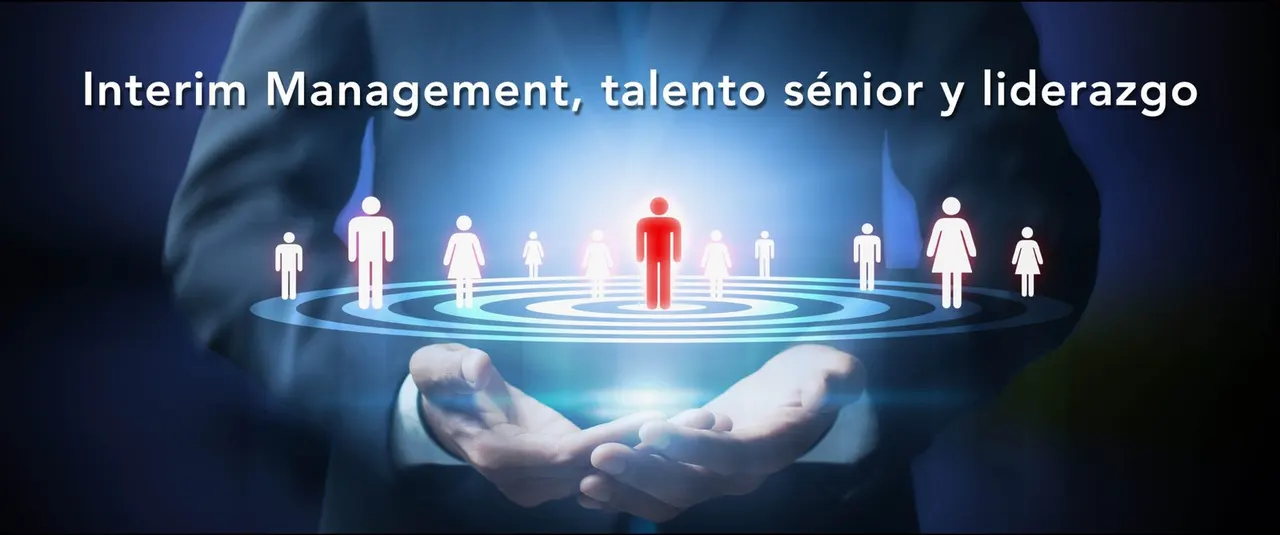
Interim Management, senior talent and leadership
Madrid, 15 January 2024. Leadership, understood as the set of skills that enables one to influence individuals or groups, is closely linked to executive management and senior talent. The combination of experience and knowledge facilitates the strategic vision that is essential for successfully overcoming the obstacles that arise when implementing solutions […]
Madrid, 15 January 2024
Leadership, understood as the set of skills that enables one to influence individuals or groups, is closely linked to executive management and senior talent. The combination of experience and knowledge facilitates the strategic vision that is essential for successfully overcoming the obstacles that arise when implementing solutions at an organisational level.
The American writer and motivational speaker Ken Blanchard, author of one of the world’s best-selling management books, *The One Minute Manager*, has a unique perspective on leadership:
“In the past, a leader was a boss. Today’s leaders must be Partners to their people… they can no longer lead solely on the basis of the power derived from their job title.”
Ken Blanchard and other experts who share his line of thinking invite us to reflect on the pivotal role of maturity and experience in the fields of leadership and executive management. Every experienced manager knows that success in implementing solutions cannot be achieved without the cooperation of the professionals who make up a company’s ecosystem and the full support of senior management. Sharing solutions when implementing a project involves ensuring they are embraced through authentic leadership—the kind that stems from humility and empowers everyone involved in executing the strategy.
Interim managers, individuals honed by the complex task of executive management, are a clear example of leadership. They know full well that talent alone is not enough; it is not sufficient merely to possess high capabilities for performing one or more roles; it is necessary to combine talent and leadership to achieve success, particularly in the demanding world of interim management. Skills without the right attitude are of little use when it comes to tackling complex situations, such as those typically encountered in executive management roles. Towards the end of the 20th century, Bill Gates made the following prediction in one of his speeches:
“In the next century, leaders will be those who empower others.”
However, new ways of working and the urgent need to attract and retain talent go beyond simply empowering others; it is necessary to foster something that is already happening organically: the fusion of junior and senior talent in the performance of management roles. The mutual benefit of this partnership is clear, and it is further reinforced by the integration of AI at an organisational level, in terms of the efficiency it brings to process management and its ability to attract the most cutting-edge talent.
Executive Interim Management is designed to resolve complex situations drawing on experience and with the utmost efficiency. This is why interim managers have long and successful professional careers; moreover, they are also individuals capable of uniting people’s efforts when they take on the responsibility of leading the implementation of solutions. In this leadership role, there can be no exceptions; one must draw on all available resources to achieve the objective. This requires a holistic view, analysing the circumstances as a whole once the various elements of the situation to be resolved have been understood.