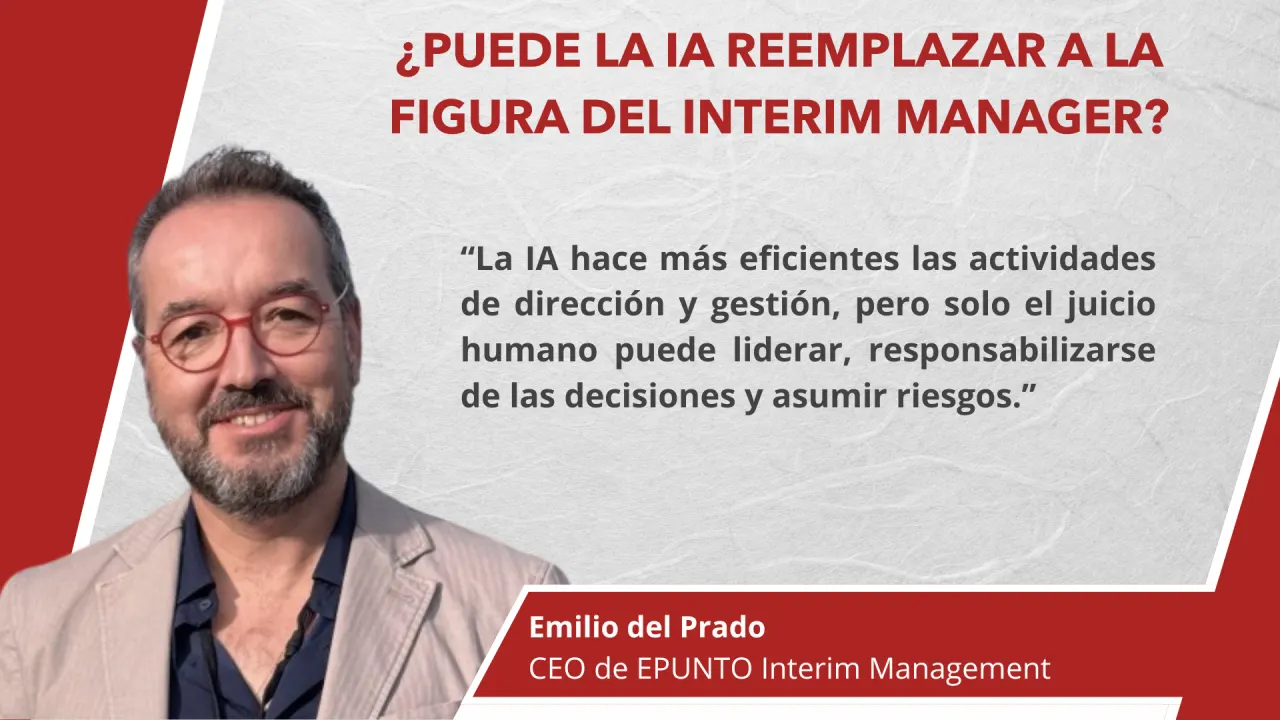
Can AI replace the role of the interim manager?
In recent years, advances in artificial intelligence (AI) have drastically transformed numerous industries, automating routine tasks and providing highly accurate predictive analytics. Against this backdrop, it is likely that many people will have doubts regarding the field of interim management: will AI one day be capable of replacing […]
In recent years, advances in artificial intelligence (AI) have drastically transformed numerous industries, automating routine tasks and providing highly accurate predictive analytics.
Against this backdrop, it is likely that many people will have doubts regarding the field of interim management: will AI one day be capable of replacing these highly specialised professionals? The answer, whilst nuanced, suggests that technology will prove to be a powerful ally, reinforcing and enhancing skills, but never a complete replacement.
AI can offer clear advantages throughout the entire lifecycle of an interim management service, thanks to data processing and pattern recognition. Advanced analytics tools can identify operational inefficiencies, analyse large volumes of financial information and predict market trends rapidly. In an initial diagnostic phase, an AI-based system could suggest areas for improvement with remarkable speed or simulate alternative scenarios in a level of detail that would have been unthinkable just a decade ago, enabling rapid decision-making – which is crucial in interim management. However, one cannot overlook the gap between quantitative analysis and the qualitative judgement that defines an experienced interim manager.
The added value of the interim manager lies in the contextual interpretation of information
Interim management is not merely about designing action plans based on figures. Their added value lies in the contextual interpretation of the information available to these professionals: understanding organisational culture, managing power dynamics, adapting to the sensitivities of teams and navigating the emotional complexity that accompanies any transformation process. These soft skills — empathy, assertive communication and situational leadership — cannot be encoded in algorithms, but rather draw on years of professional experience and the ability to interpret all the nuances of human behaviour.
An interim manager brings moral authority, personal credibility and a level of responsibility that goes beyond any measurable result
Another area where AI reaches its limits is the ability to make ethical and strategic decisions under pressure. When a company is facing a crisis, the speed and decisiveness of decisions, together with the ability to inspire confidence in investors, employees and customers, become essential. An interim manager brings moral authority, personal credibility and a level of responsibility that goes beyond measurable results. AI can recommend a course of action, but the final choice – including the responsibility that comes with it, particularly when ethical dilemmas or reputational risks are involved – rests with the experience and instinct of a seasoned leader.
Furthermore, implementing disruptive changes requires change management and strategic communication. Convincing a management team to abandon established processes, motivating staff in times of uncertainty or negotiating with Partners are tasks that demand emotional intelligence and cultural flexibility which AI, however advanced it may be, cannot replicate. Only a professional with extensive experience can gauge the right moment, tone and level of intervention to ensure that changes take root in a sustainable manner.
Ultimately, AI will enhance the work of the interim manager, providing them with more precise diagnostic and simulation tools, and generally supporting decision-making. However, no technology will ever be able to replace specialised human talent that combines strategic vision, leadership, empathy and a sense of ethical responsibility. As such, interim management remains – and will continue to be – synonymous with security, agility and sustainable growth.